
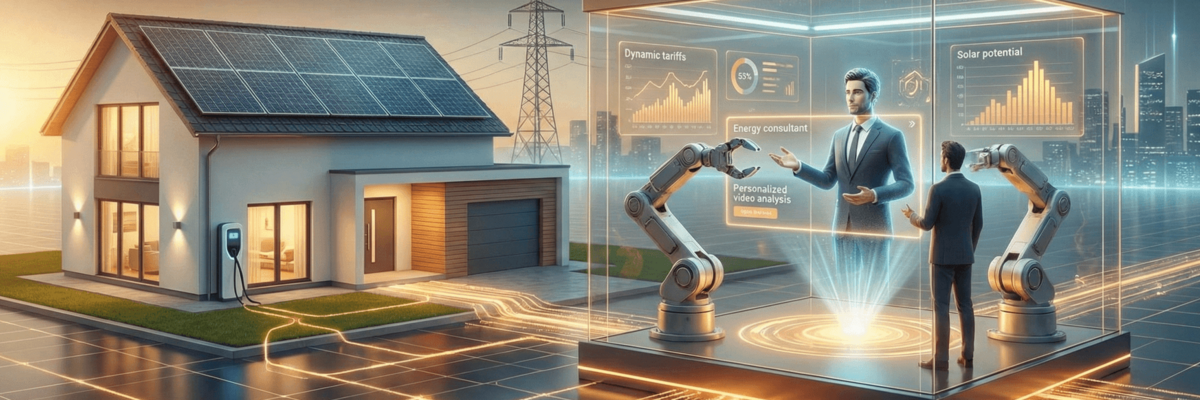
The energy industry is facing a paradoxical situation: there is huge demand for solutions such as photovoltaics, heat pumps and dynamic electricity tariffs. But the products need explaining. A classic PDF offer is no longer enough to convince a customer to change their consumption behavior. We need personal advice - but how do you scale "personal" for tens of thousands of customers at the same time?
One possible answer lies in the philosophy of modern robotics projects such as "Open Claw". They no longer build monolithic machines costing millions for a single task. They use inexpensive, modular building blocks, open interfaces and intelligent software to quickly develop functional prototypes.
What happens if we transfer this principle - the "modular innovation sandbox" - from physical robots to digital energy distribution? The result could be an AI-supported sales avatar, for example, which radically changes the customer approach.
The problem: complexity meets capacity limits
The sales team does an excellent job. When an experienced consultant spends an hour with a homeowner, the closing rate is high. He explains load profiles, calculates payback periods and allays fears about the technology. The problem is that there are not enough qualified advisors for all inquiries. And customers don't want to click through generic tariff calculators. The result is missed leads and frustrated prospects who feel lost in the complexity of the technology and regulations.
The solution: The sandbox for the "digital energy consultant"
Instead of launching a huge IT project for a new CRM that won't be ready for two years, we use the sandbox approach. We build a minimum viable product (MVP) in just a few weeks.
The scenario: A prospective customer enters their address on your website. Five minutes later, they receive an email with a video. In it, he sees the digital twin of one of your real consultants, who greets him by name and says: "Hello, Mr. Müller. I've just had a look at your roof on Musterstrasse via satellite. The south-facing orientation is ideal. With a 10 kWp system and our dynamic tariff, you could reduce your electricity costs by around 35%. Take a look, here's the calculation for your house..."
The technology stack under the hood
This scenario is not a dream of the future. It is based on the intelligent linking of available components in a protected test environment (sandbox):
- The data basis (The Facts): We use APIs (e.g. Google Solar API) to pull geodata to the customer's address in real time.
- The brain (the logic): A workflow tool (like n8n) processes the data and uses an AI-powered system to write a customized script that responds to the customer's exact data.
- The face (empathy): Modern video AI (like HeyGen) generates a deceptively real video of your advisor from the script - with perfect lip-sync.
Why this approach wins: Scalable empathy
An innovation sandbox is all about learning quickly what works without jeopardizing ongoing operations. This AI prototype offers three key benefits for energy suppliers:
- Trust through hyper-personalization: The customer notices: "This is not a generic advertising message." This creates more trust in seconds than any brochure.
- Scaling of expert knowledge: The best advisor cannot clone himself - his digital twin can. They can address thousands of customers at the same time with the same high quality, 24/7.
- Speed instead of perfection: Just as with the open-claw approach, we are not waiting for the perfect "all-in-one" solution. We use modular tools that are already available today. If a tool or the data protection requirements change, only the affected module is replaced.
Conclusion: Courage to fill the gap
The digitalization of sales does not mean replacing people. It means freeing people from repetitive tasks so that they can concentrate on the complex consultations that really count. The way to achieve this is not through rigid large-scale projects, but through agile sandboxes in which technologies can be quickly tested and discarded.