
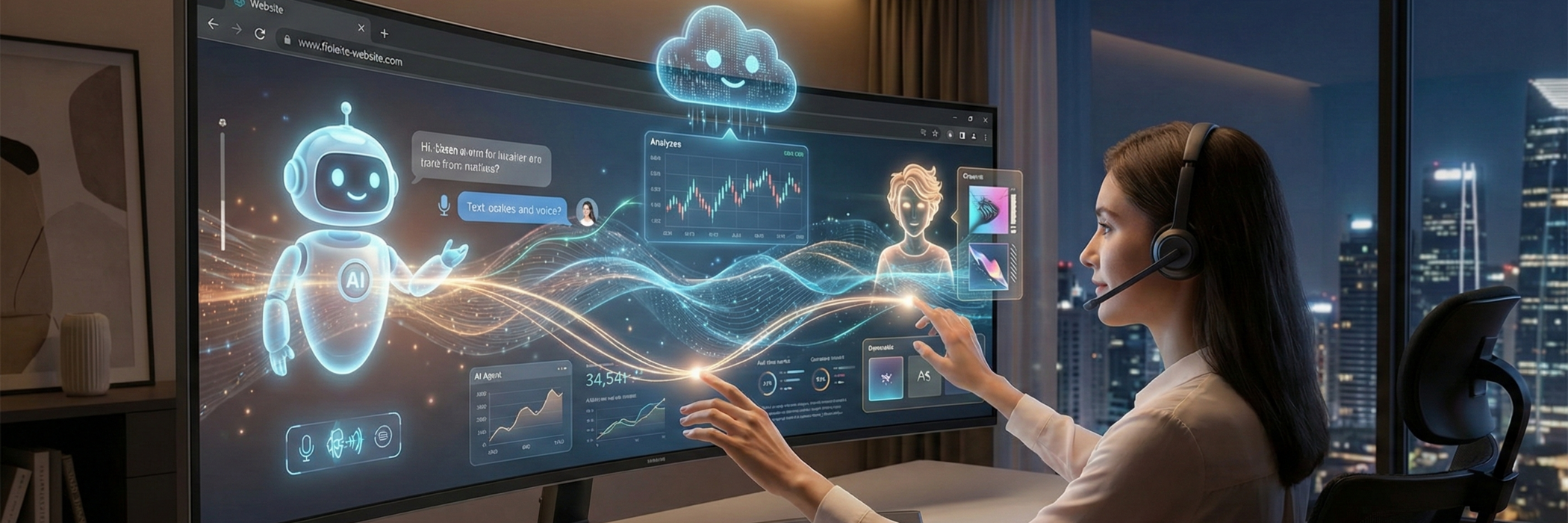
Not because the design is so beautifully "clean" or the new team photo is finally online. But because you're excited about how the website actively takes work off your hands, generates leads and serves every visitor exactly what they're looking for - before they even know they're looking for it. In 2025, a dumb website isn't just a missed opportunity - it's a business risk. The age of the static "brochure website" is over. If you don't wake up now and develop a real AI strategy for your web presence, you will drown in the digital noise of the competition.
The problem: the digital one-way street
Over the last 15 years, companies have largely seen the internet as a one-way street. We put content online - text, images, PDFs - and hoped that someone would come along, read it and then pick up the phone. These websites are passive silos of information. They are waiting to be found. They treat every visitor the same. The CEO of a DAX company sees exactly the same home page as the intern looking for a phone number. The problem with this? Today's users have changed.
We live in a world of Netflix, Amazon and ChatGPT. We are used to hyper-personalization. We expect instant responses, 24/7, without clicking through convoluted menus or waiting for a "next business day" email response. Today, a static website creates a cognitive dissonance for the user: "Why is this so complicated when the rest of my digital life is so simple?"
The solution: the intelligent platform (the paradigm shift)
The difference between a 2020 website and a 2025 website is artificial intelligence. AI transforms a static collection of HTML pages into an intelligent platform. It's the difference between a printed product catalog and an experienced salesperson who greets the customer in the store, analyzes their needs and hands them the right product. An intelligent website does three things that a "dumb" website cannot do:
1. it learns and understands (analysis)
Instead of just counting clicks, AI analyzes behavior. It recognizes patterns. It understands why a user bounces on a certain page or which content converts a "window shopper" into a real lead. It does not segment visitors according to rigid demographics, but according to their current intent.
2. it interacts (communication)
The days of "FAQ graveyards" are over. AI-supported chatbots (based on large language models, not simple if-then rules) are your new 24/7 employees. They answer complex questions about products, help with configuration or navigate the user through the support jungle - in natural language and based on your specific company knowledge base.
3. you automate and personalize (action)
This is the top class. An intelligent platform adapts in real time. The returning customer sees different content than the first-time visitor. Product recommendations are dynamic, not static. Forms fill out intelligently. The website works for the user, not the other way around.
The death of the "dumb" website is not bad news. It's the biggest opportunity since the invention of e-commerce. By adding intelligence to your web presence, you transform it from a cost to a measurable asset. You create a system that scales, that learns and that offers your customers real added value.
Are you ready to challenge the status quo? We can help you bridge the gap between your vision and the technical possibilities of AI. Let's talk about how to make your website intelligent.