
MarTech Blog: Digital & AI
Deep dives and tech blueprints for AI automation, web development, open-source architectures, and data-driven innovation.
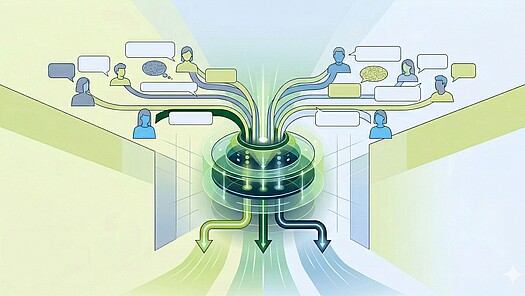
Intention routing in modern chatbots
Remember the chatbots of the first generation. You typed "I have a problem with my invoice" and the bot replied: "I didn't understand you. Please choose: 1) Support, 2) Sales." Frustrating, isn't it?
weiterlesen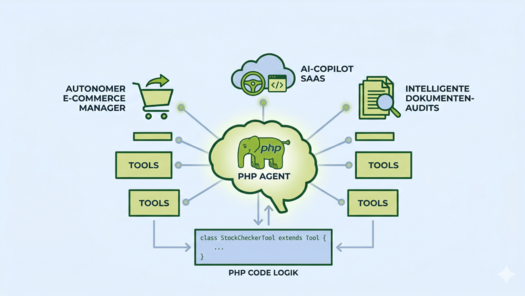
The renaissance of PHP in the AI era: Neuron AI
The technology landscape of recent years has been characterized by an almost paradoxical state of affairs: While PHP continues to form the backbone of over 75% of the modern web and frameworks such as Laravel have taken developer productivity to a new level, the artificial intelligence revolution seemed to be taking place primarily in the world of Python.
weiterlesen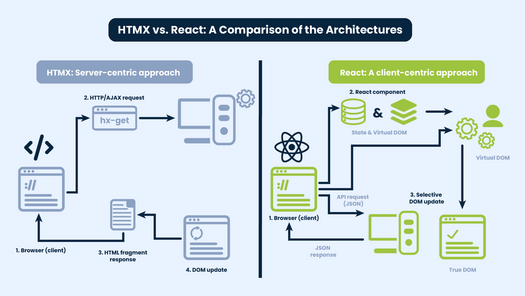
HTMX: The revolution in web development? A look for PHP developers
In modern web development, there often seems to be only one way to go: Complex JavaScript frameworks such as React, Angular or Vue. These frameworks undoubtedly have their justification, but they also have disadvantages: long loading times, complicated state management systems and a high learning curve.
weiterlesen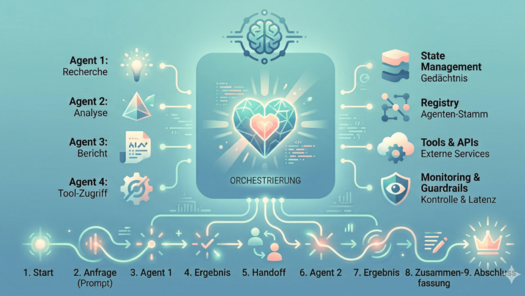
When agents run amok: The Anatomy of the "Agentic Fail"
In theory, the world of multi-agent systems is perfect: Agent A researches, Agent B analyzes, Agent C writes.
weiterlesen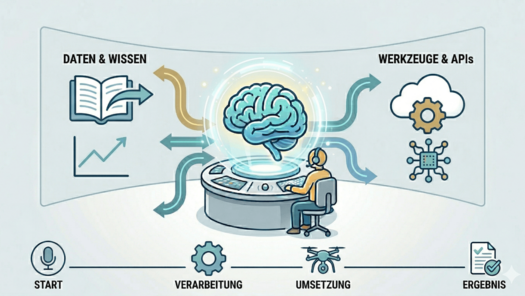
Orchestrating intelligence: back-end architectures for multi-agent systems
In the early phase of generative AI, the focus was on prompt engineering for individual models.
weiterlesen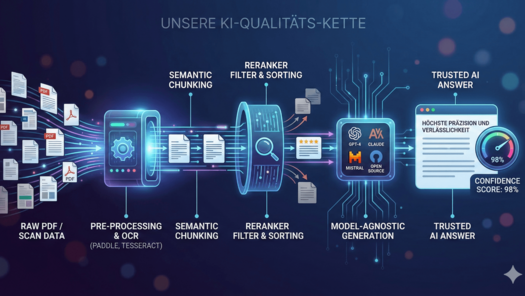
Beyond the hype: What makes truly accurate enterprise AI at its core
A crucial point is often overlooked in the current discussion about artificial intelligence: The quality of an AI response is not a product of chance of the language model used alone.
weiterlesen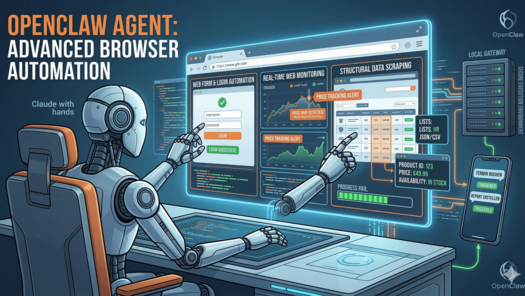
The architecture of automation with OpenClaw.
In the current AI landscape, the transition from purely text-based large language models (LLMs) to action-oriented AI agents marks the next significant development step.
weiterlesen
Digital Sovereignty: OpenClaw & openDesk
The debate about the digital sovereignty of the public sector has been given a solid foundation with projects such as openDesk. But while openDesk provides the tools for day-to-day work, the question arises as to the automation of the future.
weiterlesen
Digital memory: How OpenClaw masters the context swap.
Technically speaking, an LLM is like a goldfish with the IQ of a genius: it solves complex equations in quantum physics, but after 30,000 words it forgets your name or the goal of its mission. How do we prevent agents from losing their identity and long-term goals in the black hole of the limited context window?
weiterlesen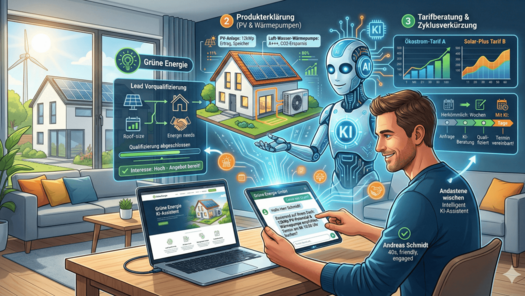
AI-supported digital sales assistant for energy service providers
An intelligent chatbot in combination with a dynamic website can be much more than just a "question and answer tool" for energy service providers.
weiterlesen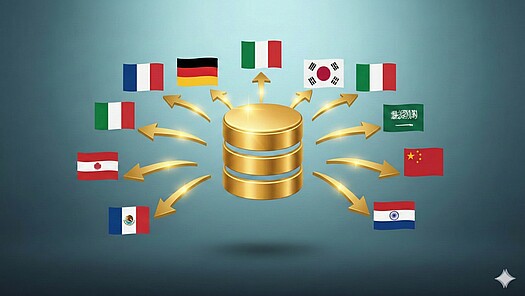
A knowledge base. Every language.
How our AI Suite is redefining multilingualism.
Multilingualism has long been a structural problem of digital systems.

With reranking & smart logic against AI overthinking
Precision counts in our day-to-day work. But anyone who uses AI in general will be familiar with the phenomenon: the AI "thinks" forever, only to deliver an answer at the end that misses the core of the question due to all the ifs and buts.

The modular innovation sandbox for sales
The digital twin of the best advisor: how to revolutionize sales with AI sandboxes. The energy transition is complex - selling products doesn't have to be. Why modular innovation instead of expensive large-scale projects is the key to tomorrow's customers.
weiterlesen
The memory of the energy supply: AI bots for data-sovereign knowledge management
In technical industries such as the energy sector, there is a huge treasure trove lying dormant: decades of technical documentation, complex maintenance protocols, regulatory requirements and internal guidelines.
weiterlesen
The revolution of agents: Why MCP is the "USB for AI"
Until recently, interaction with AI was generally limited to requests/responses. Now the focus has shifted: AI systems are increasingly being used to perform specific tasks.
weiterlesen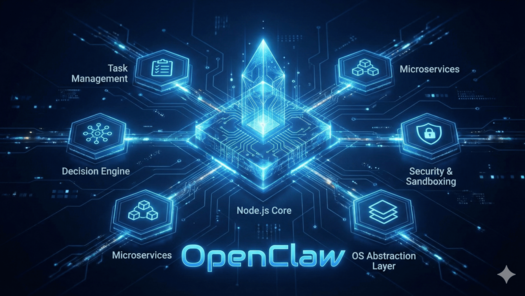
What is Open Claw - Part 2
OpenClaw is basically not a conventional program, but a runtime environment for autonomous agents that abstracts the operating system. Technically speaking, it is a local runtime node that wires LLM intelligence to the operating system and makes it controllable.
weiterlesen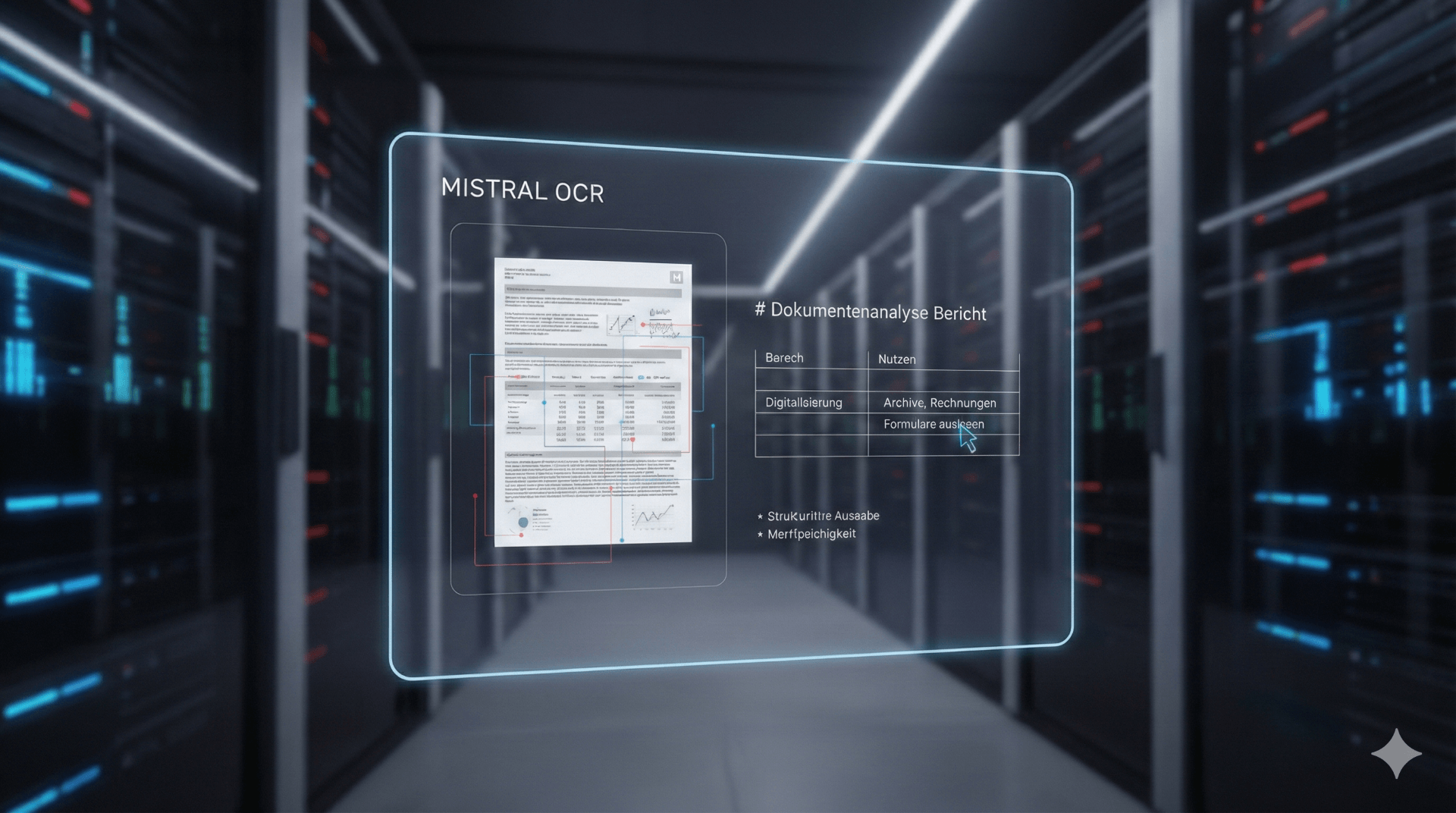
Multimodal document processing with Mistral OCR.
Mistral OCR is an exciting foray by Mistral AI into the field of multimodal document processing. Instead of relying on classic, rule-based text recognition, Mistral uses the strengths of its Large Language Models (LLMs) to "read" documents almost like a human.
weiterlesen
Is AI efficiency measurable?
AI promises efficiency, productivity and automation. It's no wonder that terms such as "increasing efficiency through AI" or "ROI of AI projects" are among the most sought-after business topics. But it is precisely the question "How much efficiency does AI really bring?" that leads many companies astray. This is because the greatest benefit of AI is not where processes run faster - but where organizations make earlier, clearer and more informed decisions.
weiterlesen
The illusion of security: risks of "vibe coding" using the example of Moltbook
From the democratization of code to the democratization of the security gap. Moltbook is more than just a quirky social network for AI agents. It is a "patient zero" for a new era of software development. The founder, Matt Schlicht, openly admitted that he did not create the platform through traditional engineering, but through "vibe coding": He prompted the vision, the AI wrote the code.
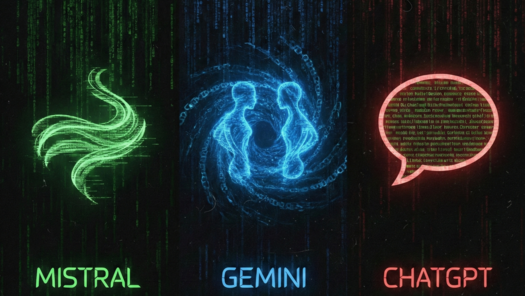
Mistral AI: Why the French AI company is shaking up the tech world - and what makes Mistral 7B so special
The world of artificial intelligence has been dominated for years by US tech giants such as OpenAI (ChatGPT) and Google (Gemini). But since 2023, a French start-up has been making a name for itself: Mistral AI.
weiterlesen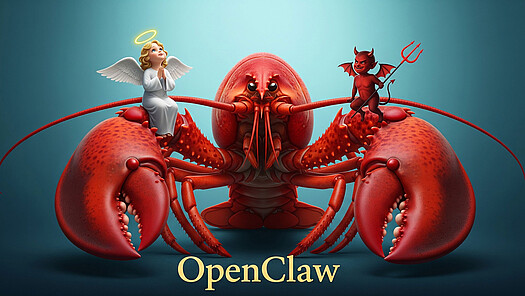
OpenClaw: The new era of AI agents - opportunity or security nightmare?
The AI market in February 2026 is upside down: in just a few weeks, the OpenClaw framework has become one of the fastest growing open source projects on GitHub. But while tech enthusiasts are celebrating the new autonomy, security consultants are sounding the alarm. We show you what you need to know now.
weiterlesen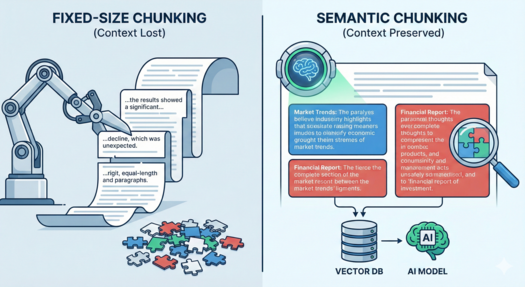
Semantic chunking: the key to context-sensitive AI search
In modern data engineering for RAG (Retrieval Augmented Generation) systems, the focus is often on the perfect prompt or the choice of the strongest LLM (Large Language Model).
weiterlesen
What is OpenClaw?
OpenClaw (formerly known as Clawdbot or Moltbot) is the technological backbone behind projects like Moltbook. It's not a simple chatbot, but an open source framework for autonomous AI agents.
Here's a simple breakdown of how the technology works "under the hood":

From local to global: publishing TYPO3 extensions professionally
Fortunately, the days of manually uploading .t3x files to the TER (TYPO3 Extension Repository) are over. The modern standard is Composer. Here we describe the workflow to deploy your extension cleanly to github and packagist so that it can be easily loaded and installed via Composer.
weiterlesen
Digital sovereignty through open source: the new foundation for AI in administration
The modernization of the German government landscape in 2026 is inextricably linked to the issue of digital sovereignty.
weiterlesen
The digital authority 2.0: AI search, chatbots and intelligent forms.
Imagine it's Sunday evening, 10:00 pm. You urgently need to apply for a new resident parking permit or know which documents are required to register a small business.
weiterlesen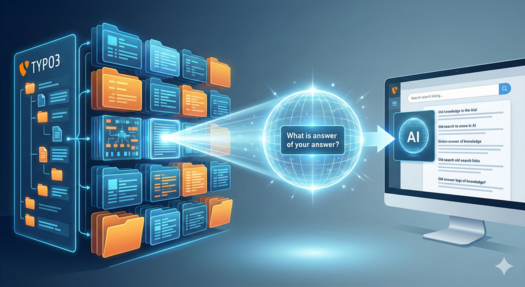
The answer engine: AI integration in Typo3.
How AI is revolutionizing search on Germany's most popular enterprise platform TYPO3. TYPO3 is an institution in the German digital landscape. While other systems come and go, TYPO3 remains the backbone for German SMEs, universities and the public sector.
weiterlesen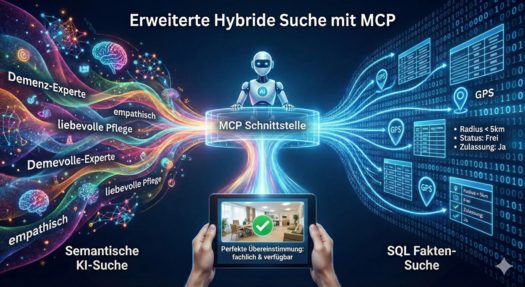
Putting an end to "approximate" - Why hybrid search is revolutionizing citizen advice
The holy grail of search: When empathy meets database facts. Imagine you are looking for a care place for a relative in an emergency situation. You don't need a list of 50 addresses that you have to call individually.
weiterlesen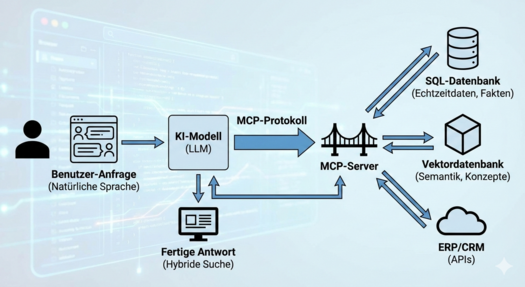
MCP: The bridge between language models and your databases.
Static AI is a thing of the past. We show you how the Model Context Protocol (MCP) enables real-time access to your existing SQL, ERP, and CRM systems. From smart shop assistants to highly precise searches for social services, discover how a hybrid search strategy can give you a true competitive advantage.
weiterlesen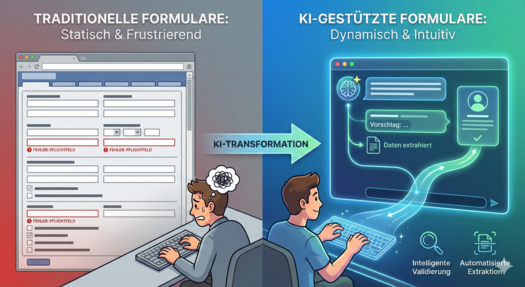
From tedious duty to intelligent dialog: The potential of AI-supported forms
We all know them: long, static online forms with dozens of mandatory fields that ask us for information that we have already entered three times. In today's digital world, such forms are often the point at which users drop out.
weiterlesen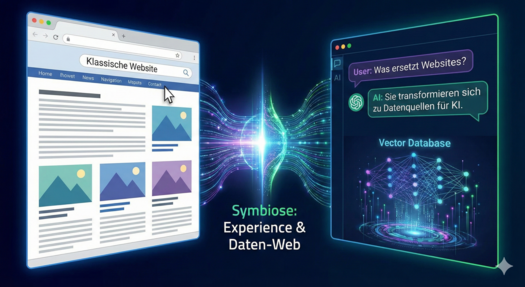
Do chatbots, AI search and vector databases have the potential to replace traditional websites?
The short answer is: they will not completely replace traditional websites, but they will fundamentally transform their role, structure and meaning.
weiterlesen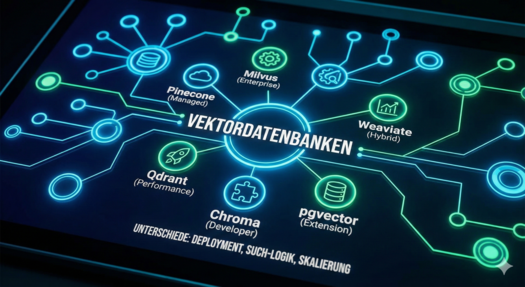
The most important vector databases
Vector databases can be divided into three categories: Native vector databases (specially developed for this purpose), extensions (plug-ins for existing databases) and libraries (pure search libraries).
weiterlesen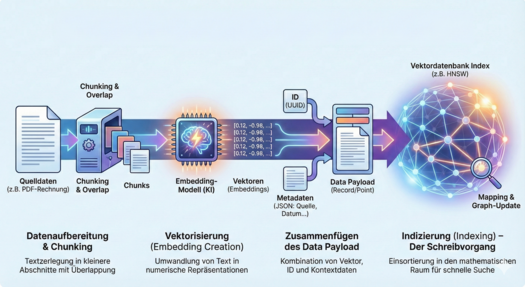
How is data stored in a vector database?
Writing data to a vector database is not a simple "storage" process like an Excel spreadsheet. It is a multi-stage transformation process that is often referred to as an "ingestion pipeline".
weiterlesen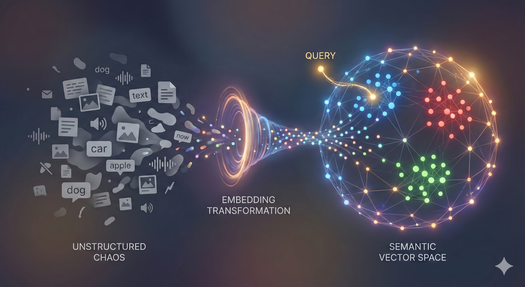
How does a vector database work?
A vector database is a specialized type of database that stores data not in tabular form (like Excel or SQL), but as mathematical representations called vectors. While traditional databases are excellent at finding exact matches (e.g. "Find customer no. 123"), vector databases are designed to understand meaning and similarity.
weiterlesen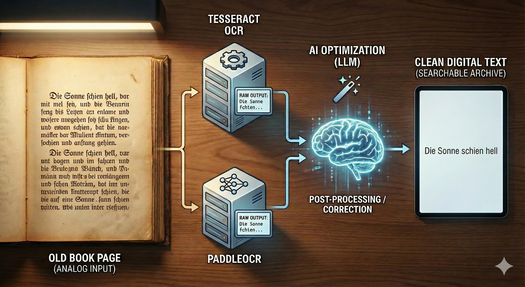
From the dusty shelf to the cloud: Tesseract, PaddleOCR and AI
Anyone who has ever held a centuries-old book in their hands knows the fascination: the yellowed paper, the smell of history and the often ornate fonts. But as beautiful as these artifacts are, they have a problem - they are analog, difficult to search and doomed to decay.
weiterlesen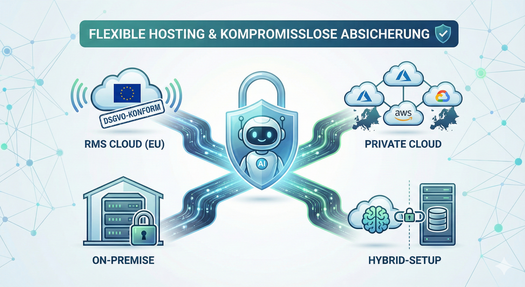
Maximum flexibility, zero risk: how to securely integrate AI chatbots into your IT infrastructure
The introduction of artificial intelligence in companies often fails not because of "if", but because of "how". In particular, when it comes to chatbots that process customer or employee data, the alarm bells are ringing for IT managers and data protection officers. The fear of GDPR breaches or security gaps is great - and justified.
weiterlesen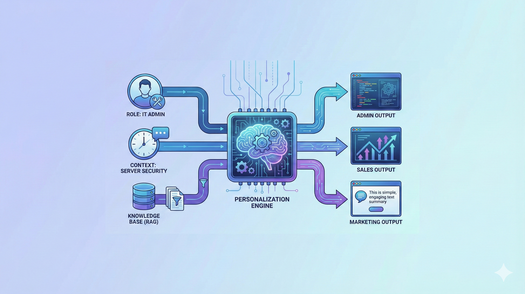
No more "one-size-fits-all": the architecture behind true chatbot personalization
Why generic answers are a thing of the past and what technical foundation is needed to dynamically tailor AI content to the user, role and context.
weiterlesen
AI on the website: What about the GDPR?
Why data protection is not a brake on innovation, but your competitive advantage. "We would like to use AI, but our legal department has concerns." The sentence is understandable. Anyone who simply blindly copies customer data into ChatGPT's free interface is actually playing Russian roulette with the GDPR. But: the equation "AI = data protection risk" is wrong.
weiterlesen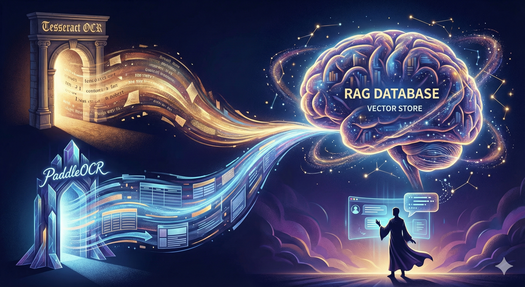
Tesseract vs. PaddleOCR: Strengthening the database for chatbots
Retrieval Augmented Generation (RAG) chatbots are revolutionizing the way we access internal company data. They combine the generative capabilities of Large Language Models (LLMs) with precise information retrieval from a dedicated knowledge database.
weiterlesen
AI saves Christmas? How the invisible system could help Santa achieve maximum 'Happiness Performance'.
The reindeer are ready, the sleigh is loaded, and Santa Claus is checking his watch: Only 24 hours to fulfill the wishes of every child in the world. A logistical masterpiece that balances on the edge of the possible every year. But what happens when the magic of the North Pole meets Deep Learning? We take a deep dive into the invisible engine behind the world's most famous logistics manager and show how Artificial Intelligence not only optimizes routes but also redefines the 'Happiness Performance' of the holidays.
weiterlesen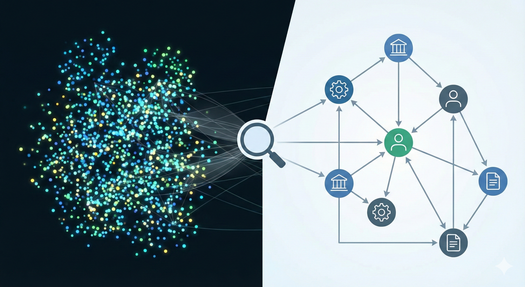
RAG is good. GraphRAG ist better. Why vectors are sometimes blind.
Does your AI really understand the connections? We need to talk about the "memory" of our LLM applications. Currently, almost all of them rely on standard RAG with vector databases. This is brilliant for finding similar text modules. But it has a fatal weakness: it is "flat". Vector databases find needles in haystacks. But they don't understand how the haystack is structured.
weiterlesen
AI images and copyright: who owns the art from the machine?
Generative artificial intelligence has taken the creative world by storm. But while tools such as Midjourney or DALL-E create impressive works in seconds, the legal system is lagging behind. Two fundamental questions arise: who owns the generated images and is the AI even allowed to train with the works of human artists?
weiterlesen
With AI into the premier class of corporate websites.
From digital dust catcher to growth engine. It's time for an uncomfortable confession. Let's be honest: when was the last time you visited a company website and were really impressed?
weiterlesen
RAG Evaluation - How do we actually know it's true?
The chatbot is live. The initial enthusiasm subsides. Then comes the question from management that every developer dreads: "How do we actually know for sure that the bot isn't telling the customer nonsense?"
weiterlesen
Size matters: RAG & Data Ingestion
Size matters. At least when it comes to the data for your AI. We see it time and again in projects: The LLM (Large Language Model) is state-of-the-art (e.g. GPT-5), but the answers are inaccurate or miss the context. The culprit is often not the model, but the "chunking".
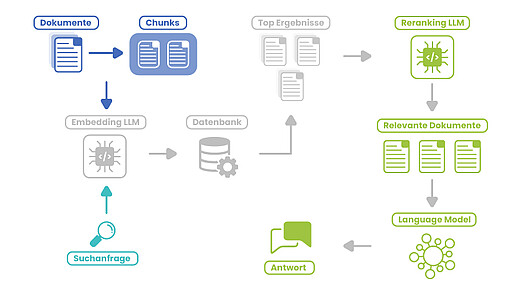
Optimizing RAG systems: Why reranking is the key to accurate answers
Have you ever experienced this? The RAG system provides many documents - but the answer from the LLM still remains imprecise.
weiterlesen
State management for advanced chatbots
More than just Q&A: How chatbots manage the context of conversations (State Management)Chatbots are ubiquitous today, but their true intelligence is not just in answering individual questions, but in their ability to remember the course of a conversation.
weiterlesen
Chatbots: the foundation of success
A chatbot is only as intelligent, precise and helpful as the data it has been trained with. This simple truth is the linchpin for the development of successful dialog-oriented AI systems. While aspects such as the user interface or integration capability are important, the content quality of the database forms the irrefutable foundation.
weiterlesen
RAG (Retrieval-Augmented Generation) in a nutshell
RAG (Retrieval-Augmented Generation) is the way to feed external, up-to-date data into the "black box" of a Large Language Model (LLM) without having to retrain it.
weiterlesen
Search technologies: RAG vs SolR
Retrieval Augmented Generation (RAG) is a revolutionary technology that underpins modern AI chatbots and Large Language Models (LLMs). It solves a central problem of pure LLMs: hallucination (the invention of facts) and the restriction to outdated training knowledge.
weiterlesen
API for secure automated file uploads
A robust and secure API for uploading files is a central component for continuously and automatically supplying an AI bot with new content. This interface makes it possible to upload documents (e.g. PDFs, text files, CSVs) directly to the backend, where they are then automatically processed and imported into the chatbot's knowledge database.
weiterlesen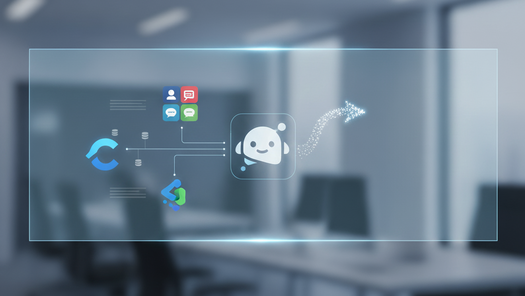
AI Bot: Slack and Confluece integration
The AI Bot now has dedicated interfaces to two central platforms for teamwork: Slack and Confluence
weiterlesen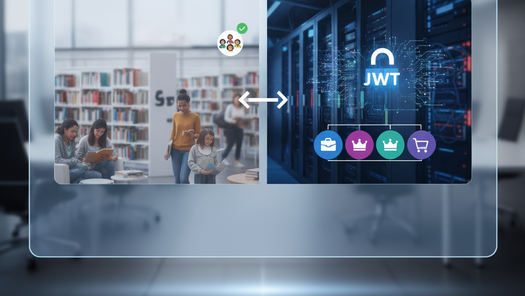
More than just communication: How a chatbot convinces with "simple language" and JWT authentication
Chatbots automate customer service, improve efficiency and make websites more intelligent. We highlight two outstanding configurable features of the rms. AI bots: communication in "simple language" and integration using JWT authentication.
weiterlesen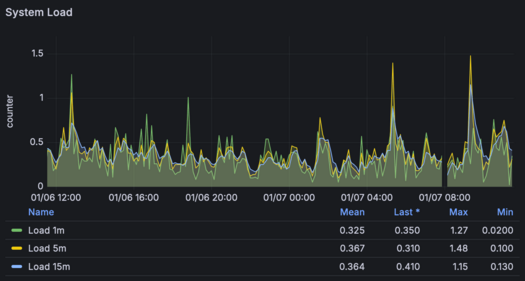
Server monitoring with Prometheus and Grafana
Prometheus and Grafana are powerful tools that help to monitor the performance and stability of websites, apps or IT systems. We use these monitoring solutions for permanent monitoring of all important system resources.
weiterlesen
Update Debian 11 to Debian 12 (bookworm)
In June 2023 Debian 12 was released. We have tested the new distribution and already in productive use. Here is a short description of how the update from version 11 to 12 works.
weiterlesen
Security: Fix Weak Key Exchange Algorithm in SSH
A security scan of a server reports the following result: The remote SSH server is configured to allow / support weak key exchange (KEX) algorithm(s). How can the SSH connection be secured?
weiterlesen
AI translation in TYPO3
Translating TYPO3 pages is often annoying and always time-consuming. Here we show how content can be translated into almost any target language with a single click using deepL.
weiterlesen
Integration of AI in TYPO3
Applications based on language models like GPT-3 or BERT are becoming more and more popular and the number of tools like ChatGPT is increasing almost daily. This article is specifically about the integration of GPT-3 in TYPO3.
weiterlesen
Secure VPN with Wireguard and wg-easy
WireGuard is a modern VPN protocol that is characterized by simple implementation, high security and high speed. Possible uses include secure connections from the home office to the office, as an access point to server systems or for connecting local networks from remote locations. In the following, we will briefly describe how to set up your own Wireguard VPN server with Docker.

Automatic connection of SSH through a proxy
How do you automatically configure the use of a proxy for certain SSH connections, e.g. to use a static IP within a company network from the home office?
weiterlesen
Content Security Policy (CSP)
Content security policy is a security feature that web designers and server administrators can use to prevent attacks such as cross-site scripting (XSS).
weiterlesen
Shrink VirtualBox VDI Image
Virtual Box VDI images can get much relatively large over time. This is a brief guide to shrinking these images.
weiterlesen
TYPO3 Multi-Factor Authentication
TYPO3 V11 includes 2-factor authentication in the core. This makes it easy to implement more secure authentication mechanisms for all backend logins.
weiterlesen
Thumbnails and pagination in TYPO3 11
Missing thumbnails in the backend and no longer working pagination for news or solr in the frontend. This small tutorial shows how to display the thumbnails again.
weiterlesen
Translate XMLs with DeepL
Automate complex and laborious manual translation processes using AI from DeepL via a php API.
weiterlesen
TYPO3 PageTitleProvider for own extensions
Creating custom PageTitleProviders for TYPO3. Use cases are extensions that use a single page for displaying different content like single views of news or blog posts.
weiterlesen